
.png)

.webp)
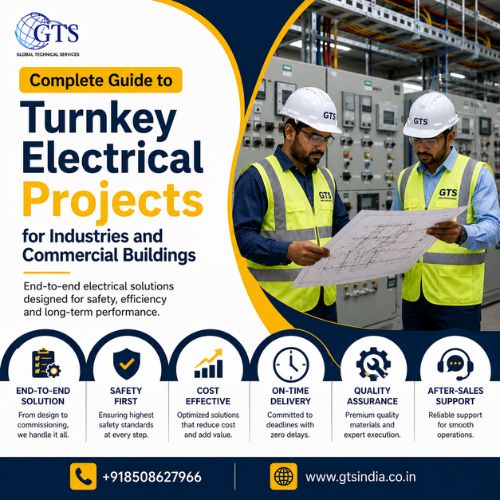
The client shares the project requirements, and the contractor takes responsibility for planning, sourcing materials, carrying out the installation, testing the system and handing over a fully operational electrical installation.
This approach allows businesses to focus on their operations while experienced professionals manage every stage of the electrical work.
How a Turnkey Electrical Project Works?
A successful electrical installation does not happen by accident. It is the result of careful planning, technical knowledge and coordination between every stage of the project. One of the biggest advantages of a turnkey approach is that every activity follows a structured process instead of being treated as separate tasks.
1. Understanding the Project Requirements
For an industrial facility, this may involve planning power requirements for heavy machinery, production equipment and automation systems. Commercial buildings may require electrical systems that support lighting, air conditioning, lifts, fire protection systems and backup power.
By understanding these requirements at the beginning, engineers can design an electrical system that matches both current and future operational needs.
2. Electrical Design and Planning
Before any cable is installed or equipment is delivered, engineers prepare electrical layouts, load calculations, cable schedules and equipment selection based on the project's operational requirements.
Careful planning helps reduce installation changes while supporting safer electrical performance. It also allows different construction activities to progress together without unnecessary interruptions.
3. Material Selection and Procurement
Material procurement is planned alongside the design phase to ensure that all electrical components meet the project's specifications.
This includes sourcing electrical panels, switchgear, transformers, cables, lighting systems and protection devices. Coordinated procurement helps ensure the right materials are available when required, reducing delays during installation.
4. Installation and System Integration
Installation involves assembling and integrating all electrical systems according to the approved design.
Electrical engineers and technicians install panels, transformers, cable trays, earthing systems, lighting networks and equipment connections while coordinating with other construction teams on site. This structured approach improves system integration and reduces the need for rework.
5. Testing and Commissioning
After installation, the complete electrical system is thoroughly tested to verify safety, performance and compliance with project specifications.
Electrical panels, transformers, protection systems, cables and equipment connections are inspected before commissioning. Successful testing ensures the electrical installation is ready for safe and reliable day-to-day operation.
Industries That Benefit from Turnkey Electrical Projects
Although every industry has different electrical requirements, many businesses benefit from having a single contractor manage the complete project.
Manufacturing plants require carefully planned power distribution for production equipment, while warehouses depend on reliable lighting, electrical panels and backup systems to support daily operations.
Hospitals require dependable electrical infrastructure for critical medical equipment, and commercial buildings need efficient electrical systems that support lifts, HVAC equipment, fire protection systems and modern workplace facilities.
Educational institutions, hotels, shopping centres, IT parks and infrastructure developments also benefit from turnkey electrical solutions because they simplify coordination while maintaining consistent quality throughout the project.
As projects become larger and more technically demanding, businesses increasingly recognise the value of working with one experienced contractor instead of coordinating multiple vendors.
Choosing the Right Turnkey Electrical Contractor
Selecting the right contractor is just as important as planning the project itself. While many businesses begin their search by looking for the best electrical contractor near them, experience, technical capability and long-term project support should be the primary considerations.
Before making a decision, businesses should evaluate contractors based on several key factors.
1. Industry Experience
Every industry has unique electrical requirements. A manufacturing plant has very different power demands compared to a hospital, hotel or commercial office building.
Contractors with experience across multiple industries are better equipped to understand these requirements and recommend suitable electrical solutions. Reviewing completed projects and industry expertise can provide greater confidence before work begins.
2. Technical Expertise
A successful turnkey electrical project requires more than installation skills. The contractor should have a qualified engineering team capable of handling electrical design, load calculations, HT and LT systems, protection systems, testing and commissioning.
Strong technical expertise helps minimise installation errors while supporting safe, efficient and reliable electrical performance throughout the project lifecycle.
3. Project Management
Electrical work must be coordinated with civil construction, mechanical installation and other on-site activities to ensure smooth project execution.
An experienced contractor manages schedules, allocates resources efficiently and resolves issues proactively, helping keep the project on track and reducing delays.
4. Safety and Quality Standards
Electrical systems have a direct impact on equipment reliability and personnel safety, making strict safety procedures and quality control essential throughout every stage of the project.
From material inspection and installation to testing and final commissioning, all work should comply with recognised electrical standards and project specifications to ensure long-term performance and safety.
Why Maintenance Matters After Project Completion?
Completing an electrical installation is only the beginning of the system's operational lifecycle. As facilities begin daily operations, regular inspection and maintenance are essential to ensure electrical systems continue to perform safely, efficiently and reliably.
Over time, factors such as dust accumulation, loose electrical connections, ageing components and increasing electrical loads can gradually affect system performance if they are not addressed through routine maintenance.
This is why preventive maintenance has become an essential part of electrical management for industrial and commercial facilities.
At GTS India, our industrial electrical maintenance services help businesses maintain reliable electrical systems through planned inspections, equipment servicing and preventive maintenance programmes.
Regular maintenance can help:
- Reduce unexpected electrical failures.
- Improve equipment reliability and performance.
- Extend the service life of electrical components.
- Minimise production downtime and operational disruptions.
- Support safer day-to-day operations.
Rather than waiting for equipment failures to occur, routine maintenance enables businesses to identify potential issues early and take corrective action before they affect productivity or business operations.
What Makes GTS India the Right Choice?
As an experienced electrical contracting company in Tamil Nadu, we provide complete electrical solutions designed for industrial, commercial and infrastructure developments. Our team focuses on understanding each client's operational requirements before recommending practical electrical systems that support long term performance.
Businesses looking for an experienced electrical contractor in Chennai or a reliable electrical contractor in Tamil Nadu value our ability to manage projects with careful planning, qualified engineers and professional execution.
We are also recognised as a trusted commercial electrical contractor in Tamil Nadu, supporting offices, commercial complexes, educational institutions, healthcare facilities and other developments with dependable electrical installations that meet modern operational requirements.
Our objective is not simply to complete a project but to deliver electrical systems that continue to perform reliably long after handover.
Planning Your Next Electrical Project?
Choosing the right electrical partner can make every stage of a project simpler and more efficient. Whether you are building a new industrial facility or a commercial property, GTS India delivers complete electrical turnkey projects with careful planning, quality execution and reliable technical support.
FAQ
1. What are the benefits of turnkey electrical projects?
They simplify project management, improve coordination, reduce delays and provide a single point of responsibility throughout the project.
2. Which industries benefit from turnkey electrical services?
Manufacturing plants, warehouses, hospitals, commercial buildings, hotels, educational institutions and infrastructure projects commonly benefit from turnkey electrical solutions.
3. How do I choose the right electrical contractor?
Look for industry experience, technical expertise, project management capability, safety standards and after project support rather than selecting a contractor based only on price.
4. Why is electrical maintenance important after project completion?
Regular maintenance helps improve system reliability, reduce unexpected failures and extend the service life of electrical equipment.
5. Does GTS India provide complete electrical solutions?
Yes. We provide complete electrical solutions for industrial and commercial projects, including design, procurement, installation, testing, commissioning and ongoing maintenance support.