
.png)

.webp)
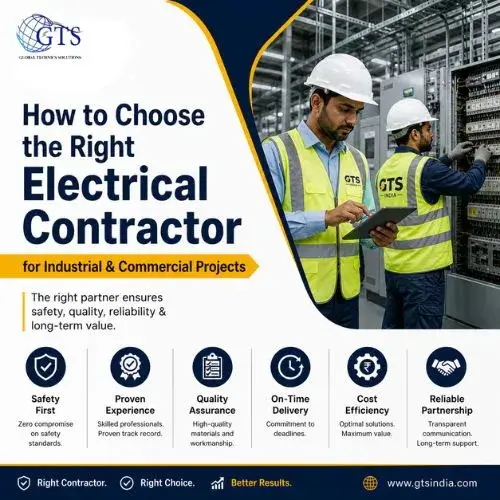
Commercial projects such as offices or retail spaces focus more on lighting, backup systems and efficient energy use.
If your work involves machinery or production systems, you must choose an electrical contractor for industrial projects with proven site experience.
HT and LT System Requirements
Electrical systems are divided into High Tension (HT) and Low Tension (LT).
- HT systems manage high voltage supply and need skilled handling
- LT systems handle internal power distribution
A contractor offering HT LT contractor services can manage both systems without gaps in execution.
Project Size, Load and Compliance
You should calculate your total load and also think about future expansion. A good contractor plans not just for today but for tomorrow as well.
Compliance with safety rules and local regulations is also crucial. A reliable contractor will follow all standards and guide you through approvals.
Types of Electrical Contractors
Not every contractor offers the same type of service. It is important to understand how different contractors operate and what they actually handle. This will help you match your project needs with the right expertise instead of adjusting your project later.
1. Turnkey Contractors
A turnkey electrical contractor in India handles the full project from planning to testing and handover. This includes design, material supply, installation and support. You work with one team which reduces delays and keeps quality consistent. This is ideal for large or complex projects with strict timelines.
2. Specialized HT/LT Contractors
Some contractors focus only on High Tension or Low Tension systems. HT contractors handle substations and high voltage supply while LT contractors manage internal distribution and panels. They are useful for specific tasks or upgrades. Choosing a contractor with HT LT contractor services helps manage both systems without coordination issues.
3. Panel Manufacturers vs Service Providers
Panel manufacturers build electrical panels based on your load needs. Service providers handle installation, testing and maintenance. If both are required, it is better to choose a contractor who can manage both or coordinate them properly to avoid delays and errors.
Things to Consider Before Hiring
Choosing a contractor requires careful evaluation because even small gaps in planning or execution can affect your entire project. Following a simple industrial electrical contractor checklist can help you compare options clearly and avoid costly mistakes.
Licenses and Certifications
Valid licenses and certifications show that the contractor follows legal rules and safety standards. This also reduces the risk of compliance issues during inspections or approvals.
Team Skill and Training
A skilled and trained team can complete work with fewer errors and better consistency. It is important to know if their engineers and technicians are trained for both installation and problem handling.
Safety Practices
Safety should be followed at every stage from planning to execution. Ask how they manage risk checks, protective measures and emergency response on site.
Communication and Support
Clear communication helps avoid delays and confusion. A contractor who gives regular updates and responds quickly will make the process smoother.
If you search online for the “best electrical contractor near me”, do not depend only on ratings. Always check their completed projects, speak to past clients if possible and verify their actual work before making a decision.
Services You Should Expect from a Professional Contractor
A good contractor offers complete solutions and not just basic work. Each stage should be handled with clear planning and proper execution so that your system works safely and without interruptions.
Design and Planning
They should study your site layout, load requirements and usage pattern before starting. A proper plan helps avoid rework and supports future expansion without major changes.
Installation
This includes cable laying, panel setup and full system integration. The work should follow safety standards and be done with quality materials to avoid early failures.
Testing and Commissioning
All systems must be tested before use to confirm safety and performance. This step checks if every connection, load point and backup system is working as expected.
Maintenance Support
Regular service is important to avoid sudden failures and downtime. We provide industrial electrical maintenance service to keep your systems running smoothly and reduce unexpected issues.
Upgrade and Expansion Support
As your business grows, your electrical needs will increase. A good contractor will support upgrades, load changes and system additions without affecting your daily operations.
Cost Factors and Budget Planning
Cost matters but it should not be your only decision factor. A low price at the start can lead to higher expenses later if quality or planning is not right.
Material Quality
TLow quality materials may reduce initial cost but can fail early and lead to repairs or replacements. Good materials last longer and support stable performance.
Skilled Labor
Experienced teams may cost more but they complete work correctly the first time. This reduces errors, rework and delays during the project.
Project Timeline
Delays can increase overall cost due to extended labor, site management and downtime. Proper planning and clear scheduling help keep the project on track.
Maintenance Costs
You should also consider future service costs, not just installation expenses. Regular maintenance helps avoid major breakdowns and keeps your system reliable.
Transparent Pricing
A clear and detailed quote with scope, materials and timelines helps you avoid hidden charges. It also makes it easier to compare contractors and make a better decision.
Check Completed Projects
Take time to review their past work before you finalize a contractor. This gives you a real idea of their quality, project handling and experience across different industries.
You can check our electrical projects to understand our work in real conditions.
By going through these projects, you can see the type of work we handle, the scale of projects we support and how we deliver consistent results. It also helps you understand if our experience matches your project needs.
Looking at actual work is always more reliable than just reading claims, and it gives you better confidence before making a decision.
Get It Right from Day One
Choosing the right contractor is not just a step in your project, it directly affects how safely and smoothly your entire system will run in the long term. Small gaps in planning or execution can lead to repeated issues, downtime and added costs.
Working with an experienced electrical contractor for industrial projects means your system is planned with the right load in mind, installed with proper safety standards and supported even after the work is complete.
At GTS, we focus on doing the work right from the start so your operations stay stable without unnecessary interruptions. As an electrical contracting company in Tamil Nadu , we support projects with proper planning, safe execution and long term service.
FAQ
1. What is the difference between industrial and commercial electrical work?
Industrial work involves heavy machines and high power systems while commercial work focuses on offices, shops and public spaces.
2. Why are HT and LT systems important?
HT and LT systems handle different voltage levels. A contractor with both capabilities can manage the complete power system safely.
3. How can I pick the top electrical contractor?
Check experience, completed projects, certifications and client feedback. Do not select based only on price.
4. What does a turnkey electrical contractor do?
Planning, design, installation and final testing are all handled by a turnkey contractor.
5. Is maintenance required after installation?
Yes. Regular maintenance helps prevent breakdowns and improves system life.