
.png)

.webp)
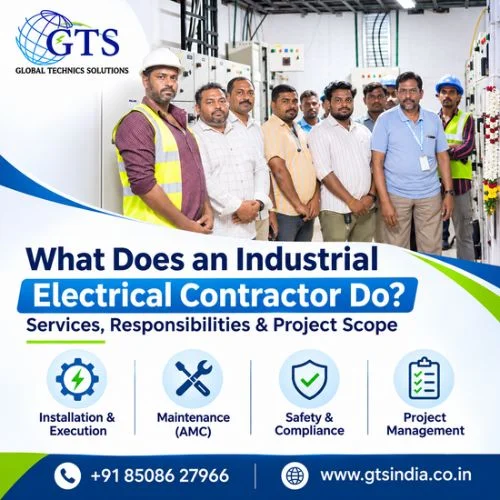
industrial buildings and production facilities. The scope depends on the project size, power requirements, equipment and operational needs.
Unlike electrical work in residential buildings, industrial projects often involve higher power loads, specialized machinery and complex distribution systems. Contractors must understand electrical drawings, technical specifications and applicable safety requirements before starting the work.
Their responsibilities generally include:
- Assessing electrical requirements based on the facility layout and machinery.
- Planning power distribution and cable routing.
- Installing electrical panels, cables and associated equipment.
- Connecting industrial machinery and production equipment.
- Coordinating testing, inspection and commissioning.
- Identifying electrical faults and carrying out maintenance work.
An experienced contractor also coordinates with civil engineers, mechanical teams, project consultants and equipment suppliers to ensure that electrical work progresses according to the project schedule.
Common Industrial Electrical Contracting Services
The requirements of a manufacturing plant are different from those of a warehouse, commercial building or processing facility. This is why industrial electrical contracting services cover several areas of work.
1. Electrical Installation and Power Distribution
Electrical installation involves setting up the systems required to distribute power throughout an industrial facility. This includes cable trays, power cables, distribution boards, electrical panels, earthing systems and connections for machinery. Proper planning is important because the electrical layout must support the facility's current requirements while allowing for future expansion.
Businesses planning an industrial electrical installation should consider equipment loads, cable sizing, power requirements and the location of electrical distribution points before work begins.
2. HT and LT Electrical Systems
High Tension (HT) and Low Tension (LT) systems are essential parts of industrial power infrastructure. HT systems are generally used for receiving and distributing electrical power at higher voltage levels. LT systems distribute power to machinery, lighting, control panels and other equipment within the facility.
An industrial HT LT electrical contractor may handle work involving transformers, HT and LT panels, switchgear, distribution systems and associated electrical infrastructure, depending on the project scope.
These installations require proper technical planning, protection arrangements and testing by qualified professionals.
3. Electrical Panel Installation and Machinery Connections
Electrical panels help control and distribute power to different sections of a facility. Their installation involves selecting suitable components, arranging connections and ensuring that protection devices are appropriate for the application.
Contractors also handle electrical connections for industrial machines, motors, pumps, compressors and production equipment. Incorrect connections or unsuitable electrical ratings can affect machine performance and increase the risk of equipment damage.
Industrial Electrical Engineering Services and Project Planning
Electrical work should be planned before materials are purchased or installation begins. Poor planning can lead to cable routing problems, insufficient power capacity and additional costs during execution.
Industrial electrical engineering services may involve reviewing the facility's power requirements, preparing electrical layouts, studying load distribution and identifying suitable equipment for the project.
Important planning activities include:
- Load assessment: Estimating the power required by machinery, lighting and other electrical equipment.
- Electrical drawings: Preparing layouts that show cable routes, panels, equipment connections and distribution points.
- Equipment selection: Choosing cables, switchgear, transformers and protective devices based on technical requirements.
- Safety planning: Considering earthing, electrical protection and isolation arrangements.
- Project coordination: Aligning electrical activities with civil construction, machinery installation and other engineering work.
For a new manufacturing unit, this planning stage helps reduce unnecessary changes once installation work starts.
Industrial Electrical Works for Manufacturing Plants
Manufacturing facilities depend on reliable electrical systems to maintain production schedules. A power distribution problem or machinery connection fault can affect multiple operations within the plant.
Industrial electrical works for manufacturing plants can include power distribution, machinery wiring, control panel installation, cable management, lighting systems and electrical connections for production equipment.
For example, a factory adding a new production line may need additional power connections, panel modifications and cable routing. The electrical contractor must assess whether the existing infrastructure can support the additional load or whether upgrades are required. Similarly, warehouses and processing units may require electrical arrangements for material handling equipment, pumps, ventilation systems and other industrial applications.
The actual scope should be based on the machinery specifications, site conditions and approved electrical drawings.
What Is the Role of a Turnkey Electrical Contractor?
A turnkey electrical project involves managing an agreed scope of work from initial planning through installation, testing and handover. Instead of coordinating several separate contractors for different electrical activities, the client works with one contractor responsible for the defined project scope.
Businesses considering a turnkey electrical contractor in Chennai should understand what the agreement includes.
Depending on the project, the scope may cover:
- Site assessment and requirement analysis.
- Electrical design and planning.
- Material selection and procurement.
- Installation and execution.
- Testing and commissioning.
- Documentation and project handover.
Before finalizing an agreement, clarify material specifications, project timelines, testing responsibilities and any exclusions.
How to Choose an Industrial Electrical Contractor in Tamil Nadu
Selecting a contractor is an important decision, particularly for projects involving expensive machinery and large electrical loads.
When comparing an industrial electrical contractor in Tamil Nadu, consider the following factors:
Relevant project experience: Check whether the contractor has handled projects similar to your facility type and electrical requirements.
Technical capabilities: Understand whether the team can manage the required installation, power distribution, HT and LT systems and related engineering activities.
Safety practices: Ask about inspection procedures, qualified personnel, testing arrangements and compliance with applicable electrical regulations.
Project management: Check how the contractor handles material procurement, site coordination, work schedules and progress updates.
Documentation: Electrical drawings, test reports and equipment details should be properly documented wherever required by the project.
If your project is in Chennai, you can also explore the services of an electrical contractor in Chennai to understand the available project support.
Electrical Maintenance and Long-Term Support
Electrical work does not end when installation is completed. Industrial facilities need regular inspection and maintenance to keep their electrical infrastructure in suitable operating condition.
An industrial electrical maintenance service may involve checking electrical panels, inspecting cable connections, identifying overheating, examining protective devices and investigating recurring faults.
Scheduled maintenance helps identify potential issues before they cause major interruptions. For example, loose connections, damaged insulation and abnormal temperature increases may indicate problems that need professional attention. Any electrical inspection or repair should be carried out by qualified personnel using appropriate isolation and safety measures.
Why Choose GTS India for Industrial Electrical Projects?
Choosing the right electrical contracting company is important for businesses planning new installations, facility upgrades or ongoing electrical work.
GTS India provides an online platform through which businesses can explore its electrical contracting and service offerings. Companies looking for an electrical contracting company in Tamil Nadu can review the available information and discuss their project requirements with the team.
Whether the requirement involves electrical installation, power distribution, industrial infrastructure or maintenance, clearly explaining the project scope helps establish the work involved. Before starting a project, share the facility location, electrical drawings, machinery details, expected load and project timeline.
Visit the GTS India website to explore its services and enquire about your industrial electrical project.
Frequently Asked Questions (FAQs)
1. What is the main responsibility of an industrial electrical contractor?
An industrial electrical contractor handles electrical planning, installation, power distribution, machinery connections, testing and maintenance for industrial facilities.
2. What is the difference between HT and LT electrical systems?
HT systems handle power at higher voltage levels, while LT systems distribute electrical power to equipment and other applications within a facility. Both require suitable protection and installation arrangements.
3. What is included in turnkey electrical contracting?
Depending on the agreement, turnkey projects may include planning, design, material procurement, installation, testing, commissioning and handover.
4. Why is regular industrial electrical maintenance important?
Regular maintenance helps identify loose connections, damaged cables, overheating and other electrical issues before they lead to equipment problems or production interruptions.
5. How do I choose the right electrical contractor for a factory?
Review the contractor's relevant project experience, technical capabilities, safety practices, project management approach and ability to handle your specific electrical requirements.