
.png)

.webp)
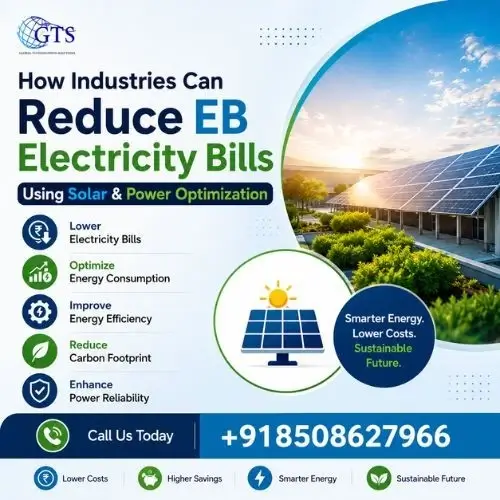
industrial power costs are affected by many hidden factors. Monthly bills rise not just because of unit usage but also because of poor electrical planning.
Factories usually pay more due to
- HT systems manage high voltage supply and need skilled handlingLong machine hours
- Peak demand charges
- Low power factor penalties
- Outdated equipment
- Poor maintenance.
In some cases, damaged wiring, overloaded systems and old electrical panels can also increase power waste. This is why many businesses benefit from a industrial electrical maintenance service that checks for hidden losses and corrects them before costs rise further.
At GTS, we always start with one question. Where is the power being wasted?
How Solar Power Helps Reduce EB Bills?
Solar power is one of the best long term ways to reduce EB bill using solar. Instead of depending fully on grid electricity, industries can produce their own power during the day.
Benefits include:
- Lower monthly electricity expenses
- Reduced dependence on EB supply
- Protection from tariff hikes
- Better return over time
- Cleaner energy source
Solar can work very well for factories with large rooftops. Daytime production units can directly use solar power which cuts EB consumption.
When industries ask us about industrial solar power system cost in India, we explain that cost depends on plant size, roof space and energy need. The long term savings can be much higher while setup requires investment.
Power Optimization Techniques
Solar power helps reduce EB bills but better savings come when industries also improve how electricity is used every day.
1. Power Factor Correction
Low power factor can lead to penalty charges and higher costs. By using capacitor banks or correction panels, industries can improve efficiency and reduce wasted power. The power factor correction benefits industries by lowering penalties, improving voltage stability and supporting better machine performance.
2. Load Management
Running multiple heavy machines during peak hours can increase demand charges. Smart load planning helps balance power use and reduce unnecessary costs without affecting production.
3. Energy-Efficient Equipment
Old motors pumps and lighting systems can waste large amounts of electricity. Upgrading to efficient equipment can lower daily power use and improve long term savings. For industries asking how to save electricity in factory, this is one of the most effective solutions.
Industries can achieve better cost control and bigger EB savings when solar power is combined with these optimization methods.
Types of Solar Solutions for Industries
Not every factory needs the same solar plan. At GTS, we guide businesses based on actual load and budget.
1. On Grid Solar System
Connected to EB supply and sends extra power back where rules allow.
2. Off Grid Solar System
Works with battery storage for independent power.
3. Hybrid Solar System
Uses both grid and battery support.
For most industries, on grid systems are more practical because they reduce monthly bills while keeping operations stable.
EB Bill Components Explained
Many industries pay EB bills without checking the full breakdown. Understanding the parts of your bill is the first step to saving money.
Main components include:
Energy Charges: Payment for units consumed
Demand Charges: Based on maximum power demand during a billing cycle
Power Factor Penalty: Extra charges if power factor is low
Fixed Charges: Basic service fees
Taxes and Duties: Government related charges
At GTS, we help industries study each section because many factories can lower costs simply by improving power factor and demand control.
Cost vs Savings: Is Solar Worth It?
Many owners focus only on setup cost and delay action. But looking only at initial cost can be a mistake.
A solar setup may seem expensive at first but over years it can:
- Cut major EB costs
- Give return on investment
- Improve operational savings
- Add asset value to the business
When we discuss industrial solar power system cost with clients, we always compare setup cost with long term savings and not just with purchase price.
For many industries, payback can happen in a few years depending on usage.
Real Life Example
A manufacturing unit in Tamil Nadu came to GTS with rising EB bills and regular penalties. Their problem was not just power use. Their factory had low power factor, old lighting, poor scheduling and unused rooftop space.
After a full energy review we recommended solar installation, power factor correction and electrical upgrades. The result was: lower monthly EB costs, reduced penalties and better system efficiency.
This is why choosing the right electrical experts makes a real difference. Correct planning matters more than random spending.
Common Mistakes to Avoid
Many industries spend money but still fail to lower bills because of wrong choices.
Avoid these mistakes:
- Installing solar without energy audit
- Ignoring power factor
- Using poor quality equipmet
- Delaying maintenance
- Not checking EB tariff structure
- Choosing unskilled contractors
At GTS, we believe planning first saves more than rushed spending.
Why Professional Electrical Experts Are Important?
Industrial electrical systems need proper knowledge. Wrong system sizing unsafe installation or poor maintenance can increase costs instead of lowering them.
As an experienced electrical contracting company in Tamil Nadu, GTS helps industries with energy audits solar solutions power upgrades and maintenance support. Our Industrial electrical maintenance service is built to support long term savings not just one time fixes.
Checklist to Reduce EB Electricity Bills
Here is a simple action list from GTS:
- Review EB bill structure monthly
- Check power factor regularly
- Install solar where possible
- Upgrade old equipment
- Improve load scheduling
- Conduct energy audit
- Maintain panels and wiring
- Work with trained experts
If your aim is to reduce electricity bill for industries, then combining solar with proper electrical planning gives better results than using one method alone.
Final Thoughts
At GTS, we believe industries should not accept high electricity bills as unavoidable. Rising power costs can be controlled with the right action. Solar energy power factor correction, maintenance and better energy planning can all work together to create real savings.
Whether your business wants to reduce EB bill using solar or improve full factory power efficiency, the goal is simple. Spend smarter, save more and build better long term stability.
The right power plan can turn electricity from a burden into a business advantage.
FAQ
1. How can industries reduce EB electricity bills quickly?
Industries can start by improving power factor, reducing peak demand and checking equipment efficiency.
2. Is solar a good option for factories?
Yes. Solar can lower daytime EB use and reduce long term electricity costs.
3. What is the main benefit of power factor correction?
It reduces EB penalties and improves system performance.
4. How much does industrial solar cost in India?
Cost depends on system size, location and energy need.
5. Why choose GTS?
GTS provides expert electrical planning, solar support and industrial maintenance solutions for better savings.